
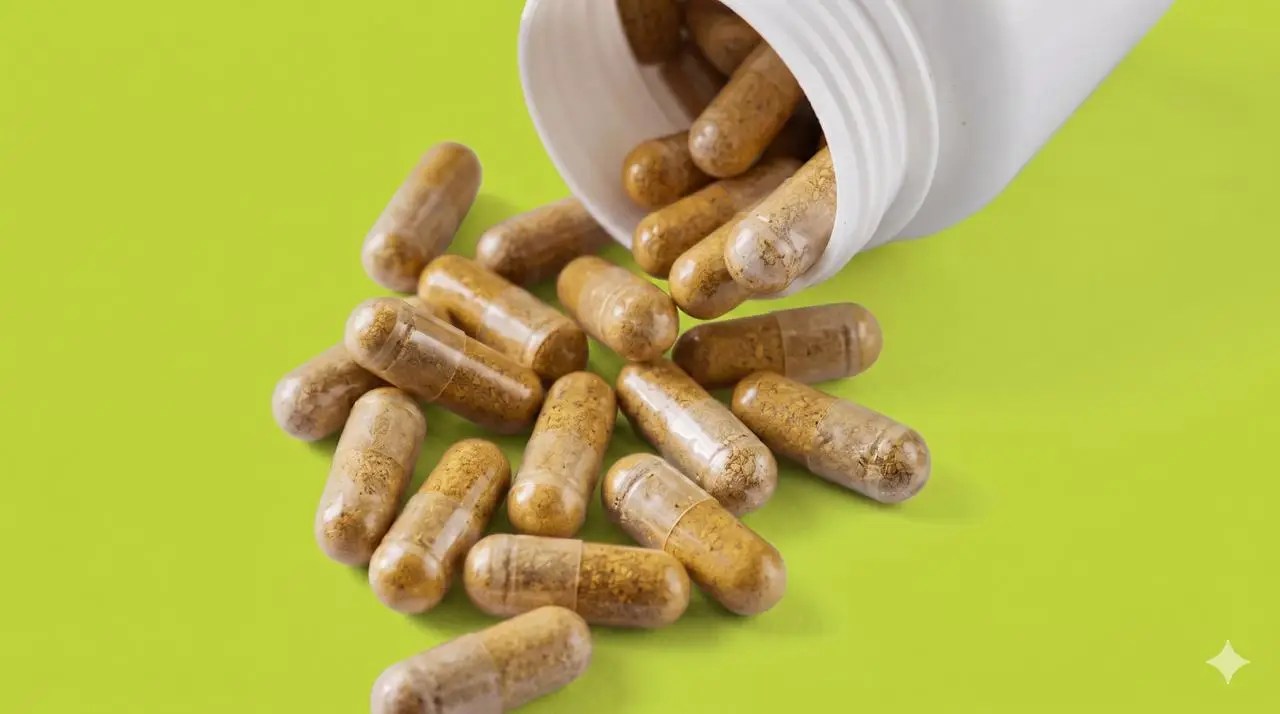
What berberine may offer for insulin resistance and weight loss — and the limitations of the research. With personal experience, risks and sources.
Berberine is often promoted to support blood sugar and metabolism. That may sound appealing if you have insulin resistance or hormonal weight-loss barriers. But natural does not automatically mean effective or free of side effects. Berberine is neither a miracle remedy nor a substitute for medical treatment.
What Is Berberine?
Berberine is a yellow plant compound found in plants such as barberry. Plants containing it have long been used in traditional medicine. Today, it is studied in relation to blood sugar and metabolism.
What Do We Know About Berberine and Blood Sugar?
Studies in people with type 2 diabetes have observed improvements in individual blood sugar measures. Products, participants and study designs differ, so this does not establish suitability for every woman with insulin resistance. A small pilot study compared it with metformin, but this is not proof that it is an equivalent, safe alternative. Do not change or stop medication in favour of a supplement.
Does Berberine Help With Weight Loss?
The findings are not clear enough to promise reliable weight loss. Some studies report changes in weight or BMI, but the NCCIH notes a high risk of bias in many studies and inconsistent results. Most participants already had health problems, so results cannot be applied to everyone. Reduced cravings or more energy are not guaranteed. Berberine does not replace nutrition, movement, rest or medical care.
My Personal Experience
I tried berberine on my own journey with insulin resistance and PCOS and personally found it helpful. But nutrition and everyday changes also played an important role. My experience is not proof of effectiveness or a recommendation. What I tolerate may not be suitable or safe for you.
What Should You Clarify Before Taking It?
Individual dosing or dose-increase instructions do not belong in a general blog article. Speak with your doctor or pharmacist, particularly if you have conditions or take medication. Discuss suitability, interactions and whether test results need monitoring. Additional ingredients are not automatically an advantage.
Side Effects and Interactions
Berberine can cause nausea, abdominal pain, bloating, constipation or diarrhoea. Medication interactions are possible; the NCCIH mentions cyclosporine as an example. Berberine should not be used during pregnancy or breastfeeding, or in infants. Do not give it to children without medical guidance. Medical advice is particularly important with blood sugar medications.
Conclusion: Make an Informed Decision
Berberine is being researched for potential metabolic effects, but it is not a harmless booster. Consider your circumstances, study limitations and risks. Start by looking at meals, movement, sleep and stress. Symptoms or abnormal blood sugar also call for medical assessment.
Sources and Further Information
Frequently asked questions
What Is Berberine?
A plant compound found in plants such as barberry, sold as a supplement and mainly studied in relation to blood sugar.
Does Berberine Help With Weight Loss?
Research is limited. It is not a weight-loss treatment and does not replace nutrition, movement and everyday changes.
Can I Just Start Taking It?
Discuss it with a doctor first, particularly with medication, pregnancy or breastfeeding. Berberine can interact with medication.
This article is for general information and does not replace medical advice, diagnosis or treatment.
About the Author
Nadine SommerNadine Sommer supports women with insulin resistance and hormonal weight-loss barriers — with a holistic approach, without diet rules.
- Certified Health & Hormone Coach
- Studying Nutritional Science
- Supported Over 100 Women
Knowledge Is a Start. Your Journey Is Personal.
Would you like support rather than another plan? Let’s see what fits you and your everyday life.
Explore coaching